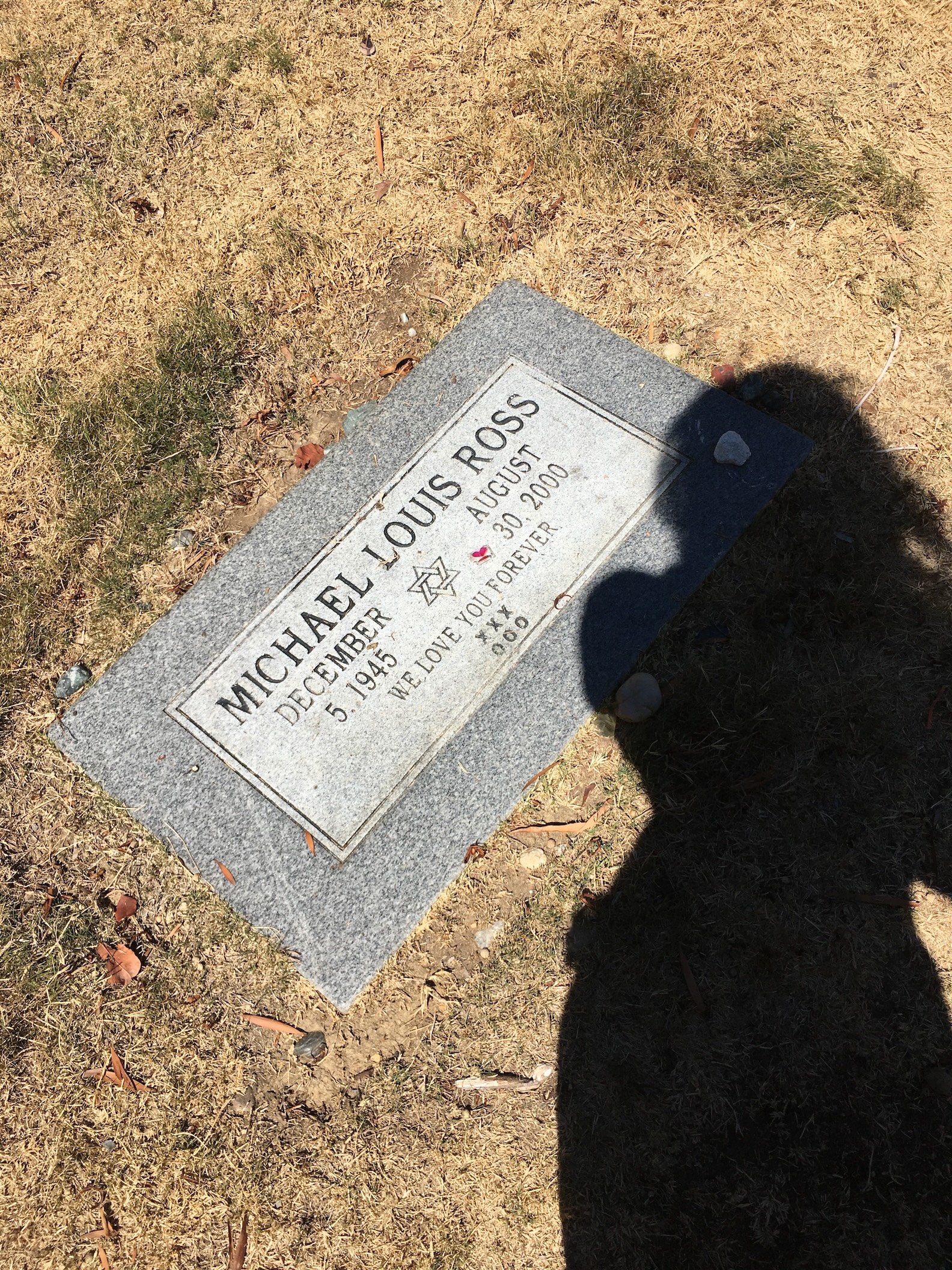
My father died twenty-six years ago, today, August 30, 2000.
There is nothing culturally significant about a twenty-sixth anniversary. It is not a milestone. It is simply one more year added to a number that has already become difficult to comprehend.
Twenty-six years.
Long enough for the world to have changed beyond recognition.
Long enough for me to have become several different versions of myself.
Long enough that there are entire portions of my life my father never saw.
And yet—not long enough to make him irrelevant.
Twenty-six years is a very long time.
But it is not the same as gone.
There is a strange mathematics to grief.
At first, we measure everything backward: the last conversation, the last embrace, the last ordinary day before the world divided itself into before and after.
Then grief begins measuring forward: the first birthday they missed, the first crisis faced without them, the first accomplishment we could not tell them about.
Eventually, enough years pass that we realize something else has happened. We have not just been living without them. We have been becoming who we are without them too.
I knew my father, but I knew him as a child knows a father.
Children encounter their parents first as roles: mother, father, authority, protector, teacher. We do not yet understand the human being inside the role. We do not know who they were before us, what they feared, what they regretted, what wounded them, or what they learned too late.
A child sees a father from below.
It’s only later, if we are fortunate, that we may meet him eye to eye.
My father died before I had that opportunity.
I knew his presence. I knew his brilliant mind. I knew his love, his art, and something of his pain.
But I never had the chance to know him as one adult human being knows another.
That is a particular kind of loss.
I grieve the father who departed, but I also grieve the man I was just then becoming capable of meeting.
I think of all the questions I had not yet become wise enough to ask. I wonder what he might have taught me during these twenty-six years. I wonder what he would think of the person I became. What we would agree about. What we would debate. What he might have learned from me.
Death does not only take the person who existed. It takes every future version of the relationship that might have existed.
My father was a brilliant artist who loved to learn, and he taught me to love learning.
And because he taught me to love learning, something of his mind continued after his did not. Every time I insist upon understanding something for myself, he is there. Every time I refuse to accept a shallow answer because it is convenient, he is there. Every time I imagine something that does not yet exist and begin the difficult work of bringing it into being, something he gave me is still moving through the world.
He was not perfect.
He had his demons, as all human beings do. My relationship with him was deeply loving, but it was also complicated and sometimes painful.
Those truths do not cancel one another.
The pain does not prove the love was false. The love does not require me to deny the pain.
The Hebrew Scriptures do not honor people by making them flawless. They preserve their brilliance beside their blindness, their courage beside their failures, their love beside the harm they caused.
They remember people whole.
Perhaps that is one of the most honest forms of love we can offer the dead.
My father also loved and deeply respected my mother in a way I do not know that I will ever witness again.
Years ago, we found a letter he had written to her while she was away and he was home with my brother and me.
In it, he wrote:
“With you gone, it’s as if part of the orchestra is missing, and as the music progresses the void becomes more apparent. I sometimes feel like I’m in an intellectual void for lack of your conversation. The silence is deafening. I love you.”
I think about those words often.
He did not merely miss having someone beside him. He missed her mind. He missed her conversation. He missed the particular part of the music that only she could play.
Watching them together taught me something about love long before I was old enough to understand what I was seeing.
His love was not merely affection. It was recognition.
It was seeing another human being so clearly that their presence changed the composition of your life. It was respecting someone so much that familiarity did not make them ordinary. It was knowing their mind, their character, their gifts—and continuing to regard them with wonder, to see another person’s depth and dignity and remain in awe of them.
To be loved is one thing.
To be deeply known, deeply respected, and still deeply cherished is another.
That, too, was part of my inheritance.
We inherit far more from our parents than names, possessions, or physical features. We inherit ways of seeing. Questions. Standards for beauty and love. Gifts we may not recognize as theirs until long after they are gone.
We also inherit wounds and unfinished struggles.
Our responsibility is not to preserve everything we were given. It is to discern what deserves to continue, what must be healed, and what must end with us.
The Hebrew word zikaron means remembrance or memorial. But in the Hebrew Scriptures, remembrance is rarely just an exercise in nostalgia. What is remembered continues to shape identity, obligation, and action in the present.
My father’s life remains consequential. His mind, his art, the way he loved my mother—all of it still moves through the present.
Even his demons remain consequential, because they taught me something about the complexity of being human.
He did not have to be perfect to matter. He did not have to live forever to continue shaping the future.
And I do not have to stop missing him to prove that I have healed.
Twenty-six years ago, my father ceased moving through the world in the way he once had. But he did not cease moving through the world.
He continued through memory. Through the love of learning he placed inside me. Through the standards by which I understand beauty, thought, and love. Through everything he gave me.
And through everything his absence required me to become.
Through questions I had to answer without his wisdom. Through decisions I had to make without his counsel. Through accomplishments I had to celebrate without hearing his pride. Through the strength I had to find in the places where I might once have reached for him instead.
His absence did not make these things better. It did not make me better than his presence might have.
But it shaped me nonetheless.
In that sense, even the space he left behind played a part of the person I became—the person he never got to meet, but whom he helped create.
My father has been dead for twenty-six years, today.
I will not pretend that twenty-six years is a short time. But neither will I confuse the passage of time with disappearance.
Twenty-six years is a very long time.
It is simply not the same as gone.


One Comment