

This time of year— this season… is full of light!
Lights on houses. Lights wrapped around trees, railings, fences. Lights everywhere you look.
The instinct is ancient, and it makes a lot of sense. See— long before modern holidays, long before electricity, human beings marked this darkest stretch of the year with flame.
Not for decoration at first—more, for survival.
The light meant warmth. Safety. Continuity. The promise that the night would not swallow everything whole. Light reminded us we’d make it through.
But what does all this light mean to us now?
For most people— decorating, gifting, reaching for cheer— these are not shallow or foolish. They’re reaching for something real: comfort, connection, a pause from the grind.
That reaching is human. It’s honest. Trying to soften the edges of time. To feel close to one another again. That impulse is good.
Still— sometimes the glow feels thin. Bright, but oddly empty. Festive, but disconnected. Its as if the symbols are still speaking, but they’re no longer saying anything.
So it’s worth asking—gently, honestly—whether the symbols we’re surrounded by still mean what we think they mean.
Symbols don’t just decorate time. They shape us. And when symbols become disconnected from their roots, they start to feel strangely hollow—full of glow, but light on depth.
That’s what happens when rituals stop asking something of us. When light becomes automatic. When meaning is replaced with atmosphere. When joy is performed rather than cultivated.
That’s when emptiness puts on a halo.
It looks sacred. It sounds magical. But it doesn’t transform us.
That doesn’t mean we need to cancel celebration or strip joy from the season. It just means we might want to dig a little deeper beneath the surface.
Where did these rituals come from? What were they originally meant to guard, remember, or teach? What were they asking of the people who practiced them before they became stylized?
Most ancient traditions understood light not as decoration, but as guardianship. Light was something you tended. Something you protected. Something that could go out if you forgot about it.
It wasn’t assumed. It wasn’t guaranteed. It wasn’t mass-produced. It was earned—one flame at a time.
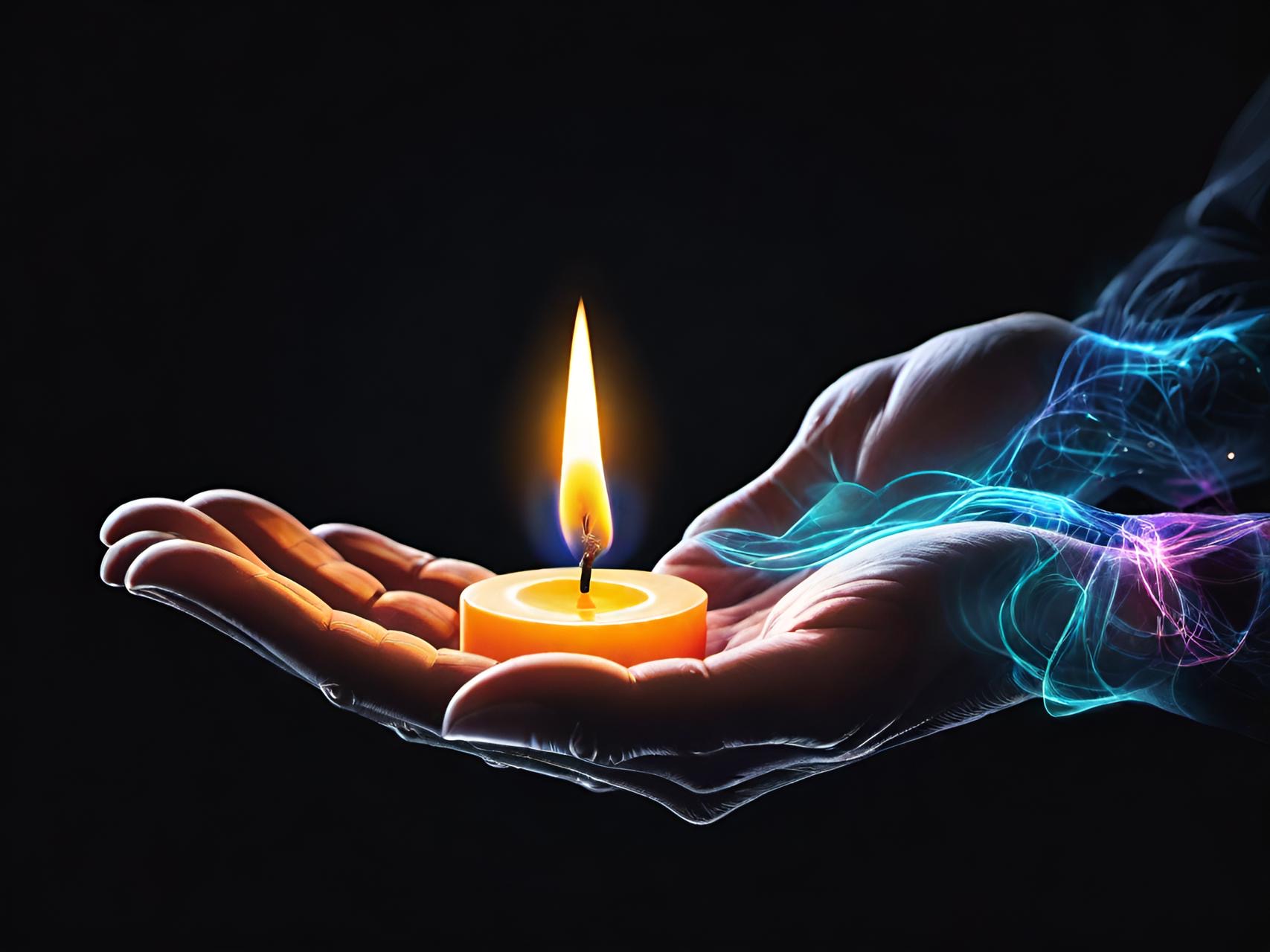
Not all traditions treat light that way, but there is a way of lighting in this same season—that’s quieter, more deliberate. A flame placed not for ambiance, but for memory. Not multiplied all at once, but increased slowly.
One light. Then another. Then another.
In that tradition, light is not mechanized. It is intended. It is lit with full awareness that it only survives if someone decides it matters enough to protect.
The act is small. Almost unimpressive. But precisely because of that, it is powerful.
This isn’t the kind of light that overwhelms the darkness. It’s the kind that pushes back against it patiently. Night after night, it expands—not because the world suddenly becomes safer or brighter, but because the commitment is kept and deepens.
It teaches something most modern celebrations forget: That light worth having requires attention. That substance arrives through discipline. But far from being somber, that joy actually grows when it is rooted in memory and connected to responsibility.
I’m not suggesting we abandon celebration, only inviting us to anchor it to something sincere.
To ask: What am I illuminating when I light up my world? What story am I embodying? And what will still be shining when the decorations come down?
Because light that matters doesn’t just glisten in December. It shimmers in January. It radiates in February. And it gleams throughout the quiet months when no one is watching.
If something in you feels restless beneath all the tinsel and ornaments, that doesn’t mean you’re deficient. It may mean you’re sensing the difference— between decoration and devotion. Between light that is displayed and light that is kept alive.
One dazzles. The other endures.
One colors a season. The other reflects how you show up when the season ends.
That kind of light doesn’t come out of opulence. It simply keeps burning— because night after night it is ignited anew.
And that kind of light doesn’t need a halo because it already illuminates on its own.
Amen.