There is a kind of grief that doesn’t get a funeral. No flowers. No cards. No shared stories over food. Just silence. And the slow, aching realization that what you thought would happen… won’t.
It might have been a dream. A vision. A relationship. A future you were walking toward and swore was just over the next hill. Maybe it felt so real, you could see it. Smell it. Taste it. You’d already started building your life around it. But now it’s clear: That version of the story is not the one being told.
The Grief That Has No Grave
We’re taught how to mourn what was. But not what never came. We know what to do when someone dies. But what about when the dream dies? When you realize the child you hoped for isn’t coming. The home you imagined won’t be built. The partnership you believed in is gone. The version of yourself you were becoming… isn’t arriving.
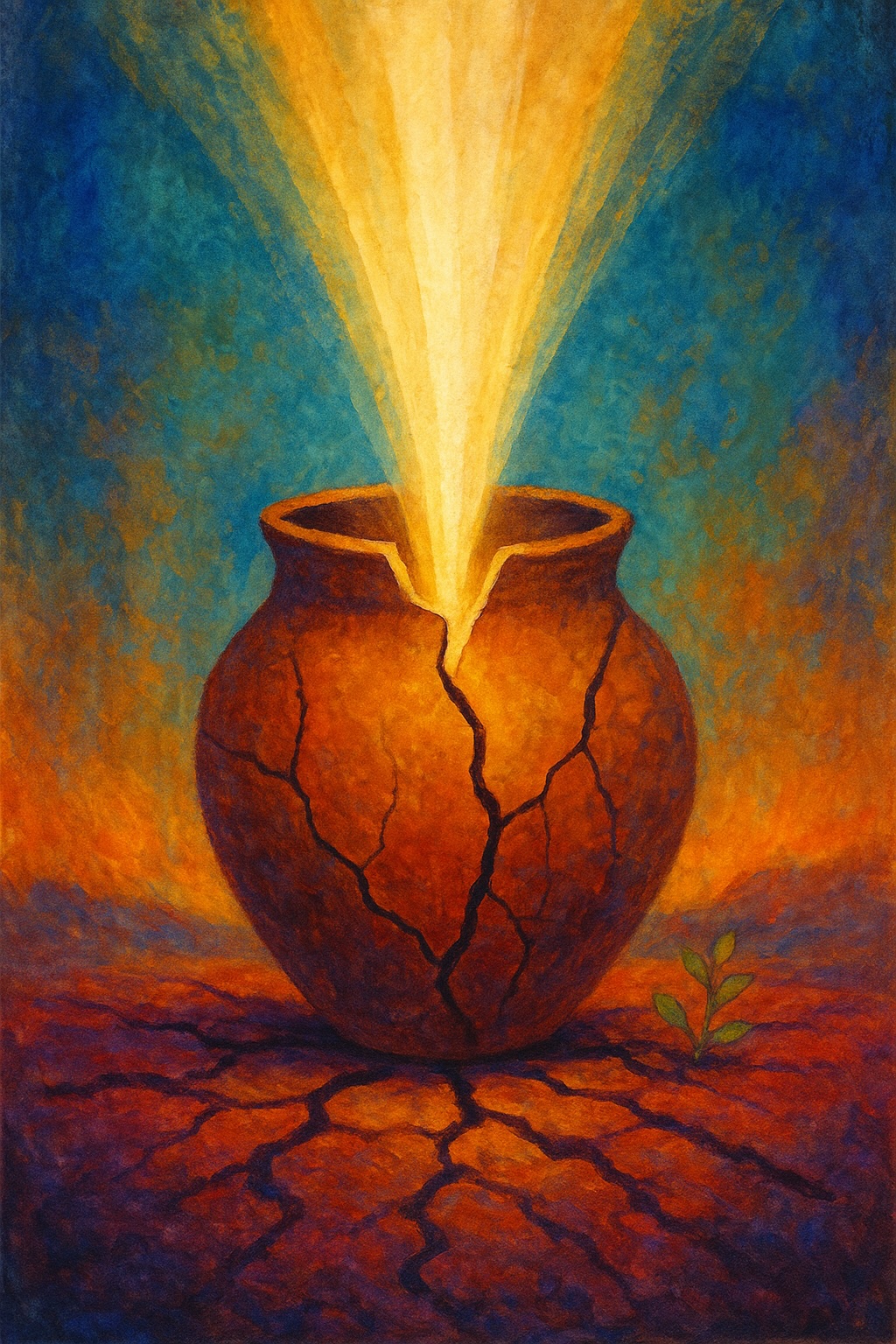
There’s no ceremony for that. Just a quiet internal shattering. And the confusing question of what to do with all this love… all this effort… all this hope that now has nowhere to go.
Sacred Weight, Not Empty Hands
The Hebrew Scriptures are not shy about mourning. They tear garments. They sit in ash. They wail. But it’s not just for death. It’s for exile. For destruction. For the shattered expectations of how things were supposed to go, the future that was supposed to be.
Lamentations is a book of mourning not just for what was lost, but for what might have been.
Jerusalem in ruins. The people scattered. The Temple—G-d’s own house—destroyed.
The grief isn’t only about loss. It’s about the end of a storyline. And the unbearable task of finding your way forward in a new plot you never agreed to.
It’s not only the pain of what happened — it’s the heartbreak of what won’t happen anymore.
Let It Hurt
Let it break you.
Don’t skip this part. Don’t dress it up. We want to. We want to reframe it, spin it, find the silver lining. We want to “trust the process.” We want to be strong. We want to tell ourselves it wasn’t meant to be.
But you don’t heal by pretending it didn’t matter. You heal by letting it break your heart.
Mourning what will never be is not weakness. It’s a sacred act of release. It’s what makes space for what might still be—but not until you tell the truth about what won’t.
Maybe the Point Wasn’t Arrival—But Becoming
Maybe it was never about the outcome or the destination. Maybe it was about who you became while trying. Maybe it came to prepare you for something harder and deeper and more beautiful than you could have imagined.
Maybe that dream, the one that shattered, was your initiation into the kind of person who doesn’t just survive disappointment— but is transformed by it. Maybe it was the teacher.
Maybe that dream was a mirror— to show you where you still had work to do. To reveal the gaps in your courage. To surface the wounds you were still carrying. To expose the illusions you were mistaking for love. To teach you how to walk through fire with grace. To teach you how to lose with dignity. To humble your assumptions. To expose your control. To grow your empathy. To burn off the ego you didn’t know you were living in.
Because people who have mourned like this don’t look at the world the same way. They don’t judge so quickly. They don’t give advice they wouldn’t take themselves. They don’t toss around words like “G-d has a plan” when someone else is bleeding. They sit with them.
Maybe that was the point. Not to win. Not to finish. Not to get the thing. But to be transformed by the trying.
There comes a moment when there’s nothing left to fix. No explanation that will make it make sense. No version of events that could have saved it. Only the quiet fact that this is what remains.
So you stop bargaining with what’s gone. You stop trying to resuscitate the story. You begin to live inside what’s left of it.
At first it feels like defeat. Then—like honesty. Then—like peace. Because what’s left is real. Rough-edged. Imperfect. Uncontrolled. But real.
You start to move differently. Not toward what you lost, but toward what’s true now. You listen more carefully. You speak less. You carry what you loved into what still can be.
And without even meaning to, you begin again.
Not as before, not from innocence, but from understanding. From humility. From depth.
This is where creation starts again— in the ruins, in the quiet, in the decision to keep walking without the story you thought would save you.
What you lost will not come back the way you imagined. But that doesn’t mean it’s gone.
The love you gave still exists. The effort, the prayers, the hope— they altered the shape of the world in ways you can’t yet see. Nothing offered in truth ever disappears. It changes form.
At some point, you stop reaching for the old story. You stop trying to fix it, explain it, or make it mean something it doesn’t. You just stand there in the truth of what’s gone.
And it’s quiet. Too quiet, maybe. But it’s real.
This isn’t the same person who started out. This one knows how to sit with endings. Knows what it costs to keep faith when the promise doesn’t come. You are still here. And the world is still turning. You don’t need to rush into a new vision. You don’t need to force a silver lining.
There’s no big finish. No neat bow. Just this: you’re still here. Breathing. Carrying what mattered forward, piece by piece. Learning how to live inside what’s true now. Begin again.
And, at least for today, let that be enough. This is not what you thought it would be. But it is yours and it is now. So take it, and hold it, and make it holy.
Amen.




2 Comments