
I want you to imagine something for a moment— and, not as fantasy, not as utopia— but as a sobering thought experiment.
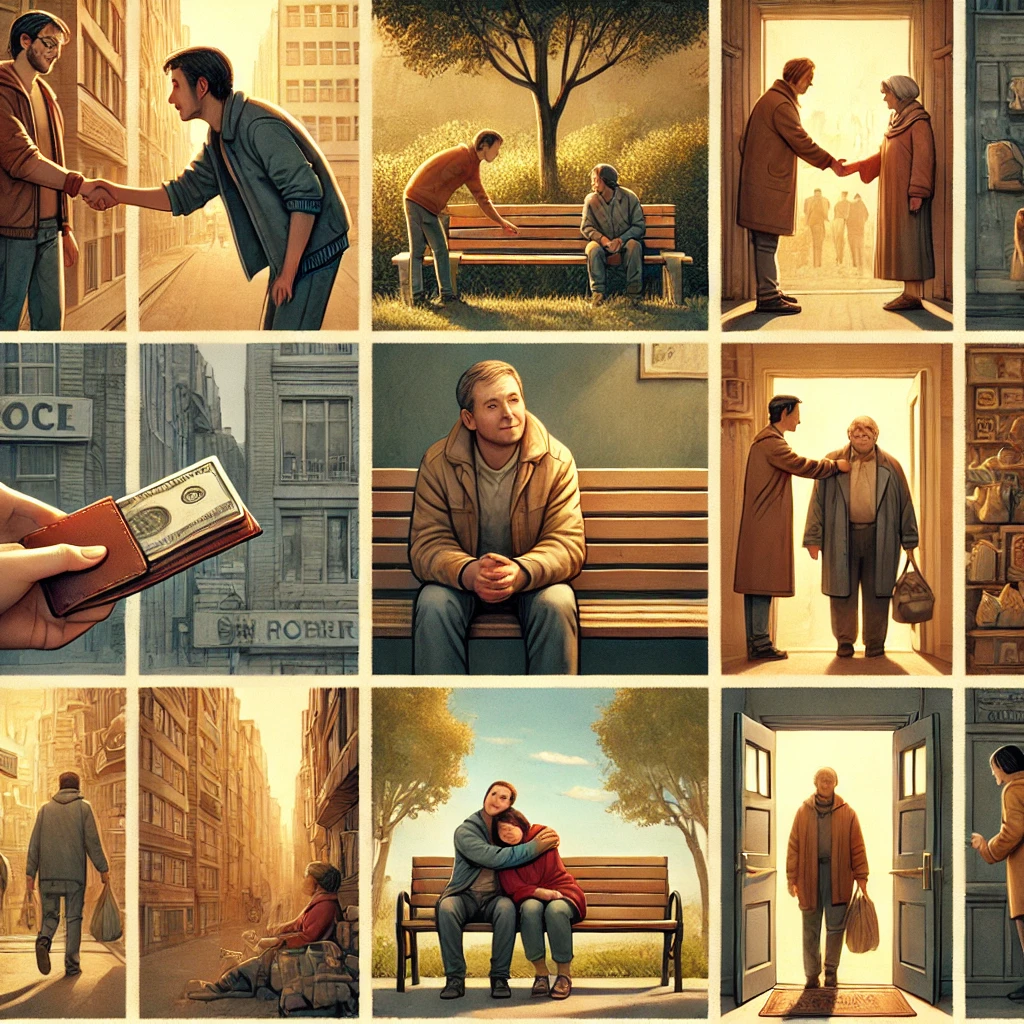
What if every human being chose, just one single time each day, to perform one mitzvah.
I’m not talking about a grand gesture. And not some sort of public performance. Not a cause. Not a movement. Not a crusade.
Just one deliberate act aligned with what is right.
If you don’t know what a mitzvah is, it’s often translated as “a good deed,” but that translation is too thin.
In the Hebrew Scriptures, a mitzvah is an instruction—coming from the root tzav, meaning to command, but also to connect. A mitzvah is an act that aligns human behavior with the moral structure of reality itself.
It is not about intention alone. It is not about how something feels. It is about doing what is right because it is right.
Some mitzvot are more obvious: do not steal, do not lie, do not humiliate. Others are more subtle: return lost property, guard your speech, show restraint when no one is watching.
A mitzvah is not a favor you do for G-d. It is maintenance for the world—and for the human soul. Each one restores a small measure of order where chaos would otherwise spread.
That is why even one mitzvah matters.
The Hebrew Scriptures never ask or expect humanity to fix the world all at once. They are almost painfully realistic about human nature. They assume fatigue. They assume resistance. They assume that most people are not saints, and never will be.
That is why the Torah is built on practice, not purity. It’s utilitarian, not fanciful.
Daily actions. Concrete obligations. Small alignments repeated over time.
The world, according to the Torah, is not broken because humans are ignorant of good. It is broken because humans often fail to purposely choose good.
From the very beginning, human beings are depicted as morally aware. Adam is not confused about obedience. Cain is not unaware that murder is wrong. The generation of the Flood is not innocent—they are described as knowing, yet choosing to corrupt what they know.
The problem is not one of ignorance but of avoidance.
Good is inconvenient. Good requires restraint. Good often demands that we absorb a cost instead of passing it on.
The Torah assumes that human beings recognize the right path more often than they admit. What they lack is not information, but will. Not conscience, but discipline. Not ideals, but follow-through.
That is why so much of Torah law is unglamorous. It governs speech, commerce, time, food, sexuality, anger, and responsibility—not because these are mysterious domains, but because they are the places where people most often choose ease over integrity.
Chaos does not need dramatic villainy to enter the world. It enters through the consistent drip of unchallenged permissiveness.
One lie, because it’s easier. One cruelty, because it goes unnoticed. One silence, when truth would cost something.
Over time, those permissions become excuses. And those excuses get repeated until they’re normalized. And once they’re normalized, they stop registering as an individual choice and become the operating environment.
The Torah’s response is not to demand perfection, but intention.
Choose the good deliberately. Choose it when it costs. Choose it when no one is impressed.
That is what a mitzvah trains a human being to do—not to know the good… but to select it, again and again, until choosing good becomes a stronger instinct than drifting toward chaos.
Now scale this thought experiment sincerely.
Eight billion people. One mitzvah each. Every day.
That is eight billion daily moments where chaos is restrained instead of unleashed. Eight billion daily interruptions against the default drift toward selfishness, fear, and resentment.
No slogans required. No agreement on politics, theology, or culture. Just restraint. Just intention. Just alignment.
The Torah teaches that the world stands on pillars—justice, truth, kindness—and those pillars are not abstract. They are built the same way stone walls are built: one stone placed carefully on top of another.
A mitzvah is not about being “nice.” It is about being precise. Precision in speech. Precision in action. Precision in how much harm you allow yourself to cause simply because you could.
Now imagine the compounding effect.
This is not naïve optimism. It is disciplined realism.
The Torah reminds us that darkness does not disappear all at once. It teaches that light must be introduced—intentionally—again and again, until darkness no longer dominates the space. Not because evil vanishes. But because it is pushed back by conscious good.
And here is the best part:
No one needs permission to do this. No one needs consensus. No one has to wait for others to go first.
A mitzvah done in private still counts. A mitzvah that goes unnoticed still repairs something real. A mitzvah done reluctantly still bends the world slightly back toward order.
The question is not whether this would change the world. The question is why we keep waiting for change that we could be creating daily with our own hands and hearts.
One mitzvah a day is a practice that is simple—but not small.
So, take inventory— not of what’s missing, but of what you have right here, right now: your skills, your voice, your land, your tools, your influence, and even your limits. Bring that into focus.
And then ask—without drama, without self-pity, and without grandiosity:
What is the most honest, constructive thing I can do with this—today? And if you can answer that, then why not just do it? So many people these days attempt to improve the world by fighting against what they see as wrong. But, you know, there is another approach. Rather than trying to change whats wrong, why not aim for what’s right? One mitzvah a day… do it for yourself, your kids, the world, G-d, or even just because you can.
What would a world where every one of us did that look like a week or a month or a year from now? I, for one, sure would love to find out!
Amen