
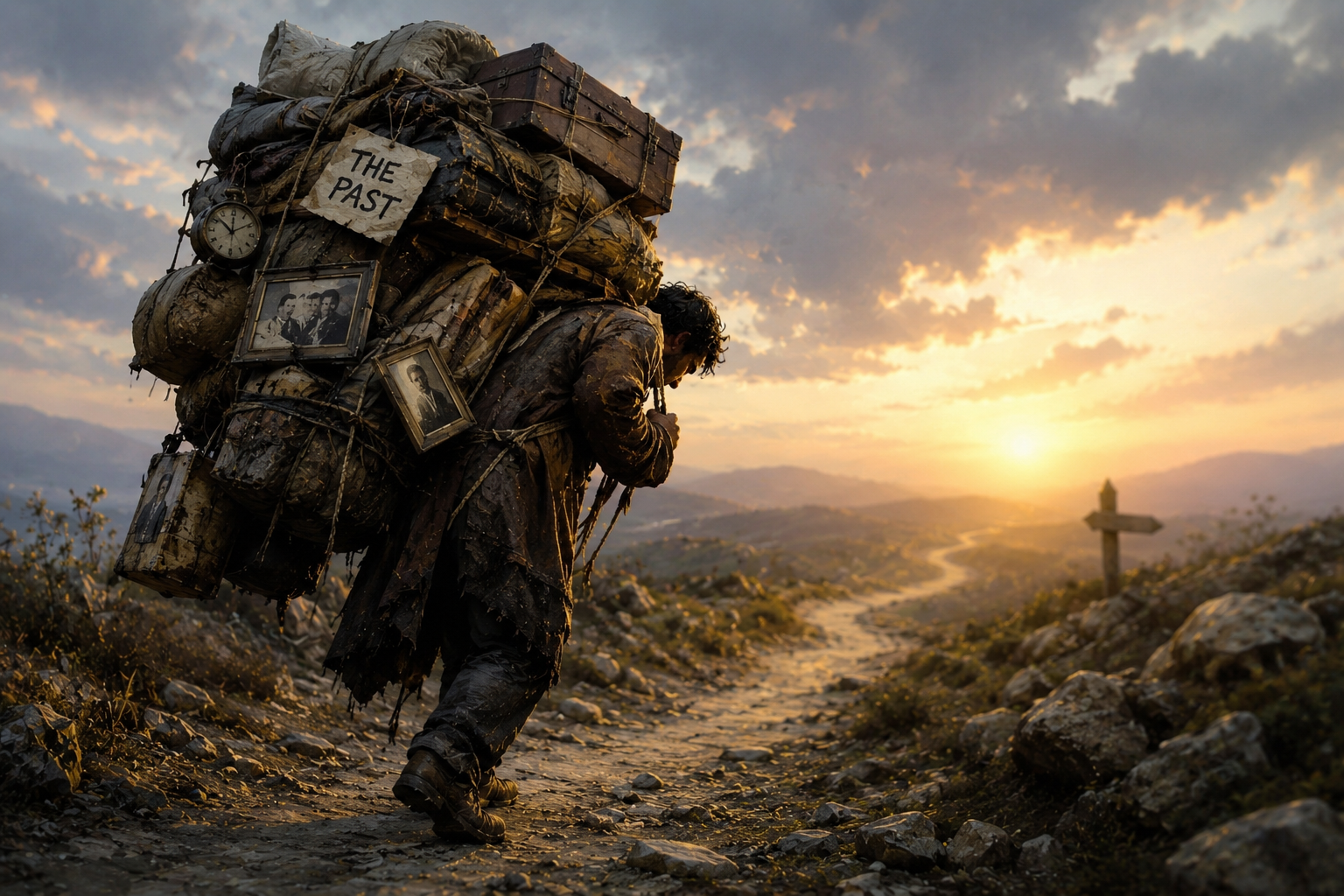

One of the stranger things about human beings is our tendency to hold on to blame.
We throw away old receipts. We discard broken furniture. We clean out closets. We replace worn-out tools.
Yet many people carry around blame for decades. They keep it carefully organized. They remember exact words spoken twenty years ago. They can recite every detail of an old betrayal. They maintain entire archives of disappointment. And despite all this effort, blame rarely seems to improve anyone’s life.
I’ve watched families spend years arguing over inheritances. Former spouses continue battles long after the marriage itself has become a distant memory. Entire communities become defined by old grievances. Nations pass wounds from one generation to the next like treasured heirlooms.
The original injury may have lasted a day. The blame survives for a century.
This is not to say the injuries weren’t real. Many were. Some were devastating. Some changed lives forever.
But there is a notable difference between remembering a wound and building a shrine inside it. Human beings often do the latter. We revisit old injuries the way some people revisit favorite vacation spots. We return to them repeatedly. We know every detail. Every turn. Every landmark. Every conversation. Sometimes we know the story of what happened better than we know the reality of what is happening now.
The Hebrew Scriptures contain plenty of conflict, failure, betrayal, injustice, and suffering. Brothers sell brothers. Kings abuse power. Leaders make disastrous decisions. People hurt one another in ways both large and small.
Yet what strikes me is how little interest the text seems to have in endless resentment. Again and again, attention shifts toward consequences, adaptation, survival, wisdom, rebuilding, and return.
Life keeps moving. The seasons keep changing. Children grow up. Fields need planting. Cities need rebuilding. Tomorrow arrives whether we are ready for it or not.
Reality appears remarkably indifferent to our arguments about who should be blamed. A flood does not care who forgot to reinforce the dam. A fire does not pause while people debate responsibility. The water rises.The flames spread. Reality simply continues.
Perhaps that is why blame can feel so unsatisfying. We imagine that identifying the cause of our suffering will somehow undo it.
But explanation and restoration are not the same thing. A person can spend years understanding exactly why they are miserable and remain miserable nonetheless. A person can correctly identify every individual who contributed to their pain and still wake up carrying that pain every morning. Knowledge and healing are not identical twins. One does not automatically produce the other.
And perhaps that is where blame becomes seductive. Because blame gives us a task. As long as we are identifying who caused the problem, we can postpone the far more difficult question of what comes next. As long as we are explaining our suffering, we do not have to decide who we will become because of it.
This is one reason resentment can feel strangely comforting. It creates the illusion of movement while keeping us perfectly still. We revisit the injury. We replay the conversation. We rehearse the evidence. Meanwhile, life waits patiently outside the courtroom.
The future does not care who wins the argument. It simply arrives.
And eventually every person faces a moment when responsibility returns—not responsibility for what happened, but responsibility for what happens next.
I sometimes wonder whether blame survives because it gives us the comforting illusion that the past remains unfinished. As long as we are still assigning fault, perhaps we imagine we are still working on the problem. Perhaps we feel that if enough people finally acknowledge what happened, the wound will close. Yet many people receive the apology they wanted and discover that little changes. The years are still gone. The loss is still real. The damage still occurred. The result remains exactly what it was.
Meanwhile, life continues its relentless march forward. New opportunities arrive. New relationships emerge. New responsibilities appear. New choices present themselves. But blame has a peculiar way of keeping our attention fixed on doors that no longer open.
Ecclesiastes observes that there is a time for everything. A time to plant. A time to uproot. A time to weep. A time to laugh. A time to mourn. A time to dance.
Perhaps there also is a time to blame. A moment when identifying fault is necessary. A moment when accountability matters. A moment when truth must be spoken plainly.
But what happens when that season ends? What happens when blame has already taught us everything it can teach? What happens when it remains long after its usefulness has expired?
Many people never ask that question. They continue carrying burdens that no longer serve any purpose. Not because they are weak. Not because they are foolish. But because letting go can feel like surrendering evidence that the injury mattered. Yet the injury does not become insignificant simply because we stop carrying it. The lesson remains. The wisdom remains. The scar remains. What disappears is the weight.
And perhaps that is one of the quiet invitations found throughout the Hebrew Scriptures. Not to deny the past or to excuse wrongdoing. Not to pretend suffering never happened. But to remember that life is always asking a question the past cannot answer: What now?
The future arrives regardless. The question is whether we decide to arrive with it, and how heavy the baggage is that we carry with us when we do.
Amen.