I want to share something beautiful with my non-Jewish friends this week, and that is the holiday of Shavuot, which we just celebrated a couple of days ago.
Well what the heck is that? Don’t worry- I’m about to tell you!
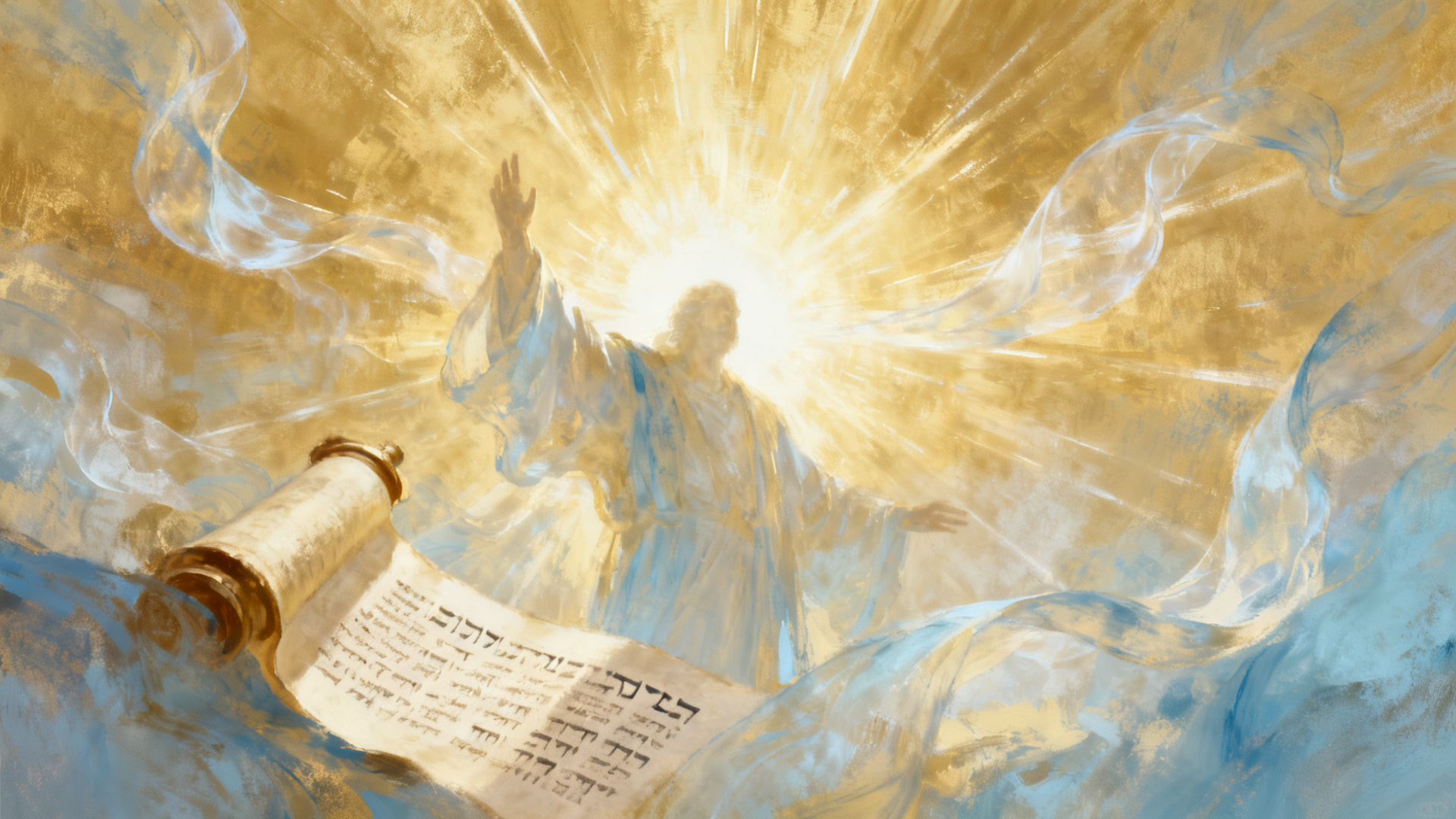
Shavuot is the celebration of the anniversary of the day the Torah was received at Mount Sinai.
It’s not a well known holiday, even to many Jews. But it is one of great significance, no matter who you are.
Many holidays in the modern world—even religious ones—have drifted into spectacle. Consumption. Decoration. Sentimentality. Vague feelings wrapped in marketing, sugar, plastic, social pressure, and tradition people barely understand anymore.
People gather. They eat. They exchange gifts. They post photos.
But beneath much of it, there is often very little substance left. Very little wrestling with truth. Very little transformation. Very little responsibility.
Shavuot is a celebration that honors something radically different.
It commemorates the moment a people collectively received a moral framework. A covenant. A structure through which free will could become meaningful instead of chaotic.
And whether people realize it or not, nearly the entire moral architecture of what we call “Western civilization” rests heavily upon the Torah.
The concepts of inherent human value, limits on power, sanctity of life, weekly rest, care for the poor, ethical law above kings, the dignity of labor, justice systems rooted in testimony and evidence, protection for the stranger, even the very idea that history itself moves toward moral purpose rather than endless cycles of tribal brutality — these ideas did not emerge from nowhere.
They came largely through the Hebrew Scriptures.
And, even for those who reject religion altogether, most still unknowingly operate inside a civilization deeply shaped by Torah values.
For my Christian and Muslim friends specifically, this matters even more. Because whether one is Jewish, Christian, or Muslim, we all inherit the Torah in some form.
For example- the Torah is not foreign to Christianity. It is its inspiration. It is not possible to even understand the “New Testament” without it or for it to stand on its own apart from it.
Islam, too, openly acknowledges Moses and the revelation at Sinai.
So at its root, Shavuot is not only a Jewish story. It is part of the spiritual ancestry of billions of people on Earth.
Of course, Jews and Christians and Muslims diverge dramatically in theology afterward— very dramatically in some cases. But before those roads split, there was Sinai. There was the idea that human beings are not just clever animals drifting through existence, but moral creatures accountable to something higher than appetite, ego, tribe, or power. And frankly, I think our civilization is suffering right now partly because we are forgetting that.
We have more entertainment than any civilization in history. More stimulation. More convenience. More technology. But wisdom? Discipline? Reverence? Depth? Moral clarity? Those are becoming harder to find.
Shavuot reminds us that freedom alone is not enough.
A people can be liberated from slavery yet still become self-destructive.
That is why the story does not end with Egypt. Passover/Pesach is liberation. Shavuot is orientation. Pesach breaks the chains. Shavuot asks, “what kind of people we will become once they are broken?”
This might be one of the deepest questions any civilization can ask itself.
What’s fascinating to me is that the Torah does not begin with utopian fantasies about humanity. It does not assume people are naturally enlightened. It does not assume that desire to be good automatically leads to goodness. It does not assume that intelligence will produce morality.
The Torah has a far more sober understanding of human nature.
Human beings are capable of astonishing beauty and horrifying destruction.
The same creature capable of composing music, building hospitals, raising children with tenderness, and searching for truth… is also capable of genocide, cruelty, corruption, exploitation, narcissism, mob hysteria, and bloodlust.
The Torah never really forgets this duality. And because it doesn’t forget it, it builds systems around it. Boundaries. Discipline. Restitution. Justice. Sacred time. Checks on power. Obligations toward others.
This is not because humanity is worthless, but because humanity is powerful. And we all know that power without moral structure becomes dangerous very quickly.
This is one of the reasons I sometimes struggle with some of the modern notions of spirituality. These overly soft, universally accepting, or conveniently vague propositions are demonstrably detached from reality.
So much of contemporary spirituality revolves around feelings, self-expression, manifestation, personal comfort, or abstract universalism.
But Torah repeatedly drags us back into concrete reality. Back into the details.
Details like:
How does one conduct business?
Should you cheat people?
Do you gossip? Or humiliate others publicly?
Do you exploit workers?
Do you honor your word?
Can you restrain your impulses?
Can you admit when you are wrong?
Are you building stable families and communities?
In other words… can we govern ourselves without becoming enslaved to appetite?
Far from being rhetorical questions, the answers will determine whether civilizations survive.
And here is another reason I think Shavuot matters far beyond Judaism.
Sinai represents something humanity is now trying very hard to deny: The idea that freedom without obligation is incomplete.
Modern culture increasingly treats obligation as oppression.
But remove obligation from civilization and eventually all that remains is appetite competing against appetite.
And history shows us exactly where that leads; not enlightenment… collapse.
The Torah understood thousands of years ago what we are now rediscovering in real time: A society cannot survive on rights alone. It also requires responsibilities.
It requires people capable of self-restraint even when no one is watching. Only people who can govern themselves internally do not require endless external force to control them.
That is part of what Sinai represents.
It is not just a “religious holiday” in the shallow sense people often experience them today. It challenges us with the, both, terrifying and beautiful idea that human beings are morally accountable. That our choices matter. That actions have consequences. That freedom is only sacred precisely because it can be used for both good and evil.
And honestly, whether you’re religious or not, I think the modern world desperately needs to revisit these questions.
Technology is accelerating faster than wisdom. Power is expanding faster than character. And appetite is being industrialized at a scale humanity has never seen before.
We are becoming increasingly capable of doing almost anything. But Sinai still asks the ancient question: Should we?
That is why Sinai still matters.
It’s not because ancient people were primitive while we are enlightened. The modern world has not outgrown Torah. In fact, human nature has not fundamentally changed at all.
We still struggle with ego. With greed. With tribalism. With envy. With lust for power. With the temptation to place ourselves at the center of existence and call it wisdom.
The tools have changed. The scale has changed. The speed has changed. But the human heart remains remarkably familiar.
And this is where I think many modern people misunderstand the purpose of Torah entirely.
Many imagine it as merely a collection of ritualized regulations. But Torah is so much more than that. Torah is an attempt to wrestle chaos into order. To elevate human consciousness above pure instinct. To build a society where freedom does not consume itself.
Even the Hebrew word “Torah” is often misinterpreted in people’s minds as “law” alone, when its deeper meaning is closer to instruction, guidance, direction. Not merely control, but orientation.
Civilization would do well to remember that human beings become dangerous when desire outruns wisdom.
I mean— look around.
We live in a time where people possess extraordinary technological power yet often lack the emotional maturity to simply handle disagreement without hatred.
We have access to nearly infinite information and yet we are becoming increasingly confused about what truth even is.
We are connected globally yet loneliness, alienation, addiction, anxiety, and meaninglessness explode around us.
While we have mastered comfort, we have lost resilience. We expand rights while we weaken responsibility. We have increased stimulation yet we are starving for depth.
And so Sinai still stands there in the distance asking uncomfortable questions modernity would probably prefer to avoid.
For instance:
What does freedom mean without discipline?
What happens when pleasure becomes the highest value?
Can a civilization survive when every restraint is seen as oppressive?
What anchors morality when human cravings become the final authority?
These are Torah questions. Ancient questions. But also completely current ones.
And this is the beauty of Shavuot.
It is not a celebration of blind obedience. It is a rejoicing of the possibility that humanity does not have to remain trapped at its lowest level. That we can grow. Refine ourselves. Challenge ourselves. And pursue something greater than impulse.
The Torah, given at Sinai, was not some magic revelation descending from the sky to remove responsibility from humanity. Quite the opposite. It is the moment responsibility begins.
So, whether one is Jewish or Christian or Muslim or simply someone searching honestly for meaning, I believe there is something profoundly valuable in stopping for a moment and remembering Sinai.
Civilization is fragile. Morality is not automatic. Freedom requires wisdom.
Which means that, perhaps, the greatest danger facing humanity is not lack of intelligence…but lack of character.
Amen